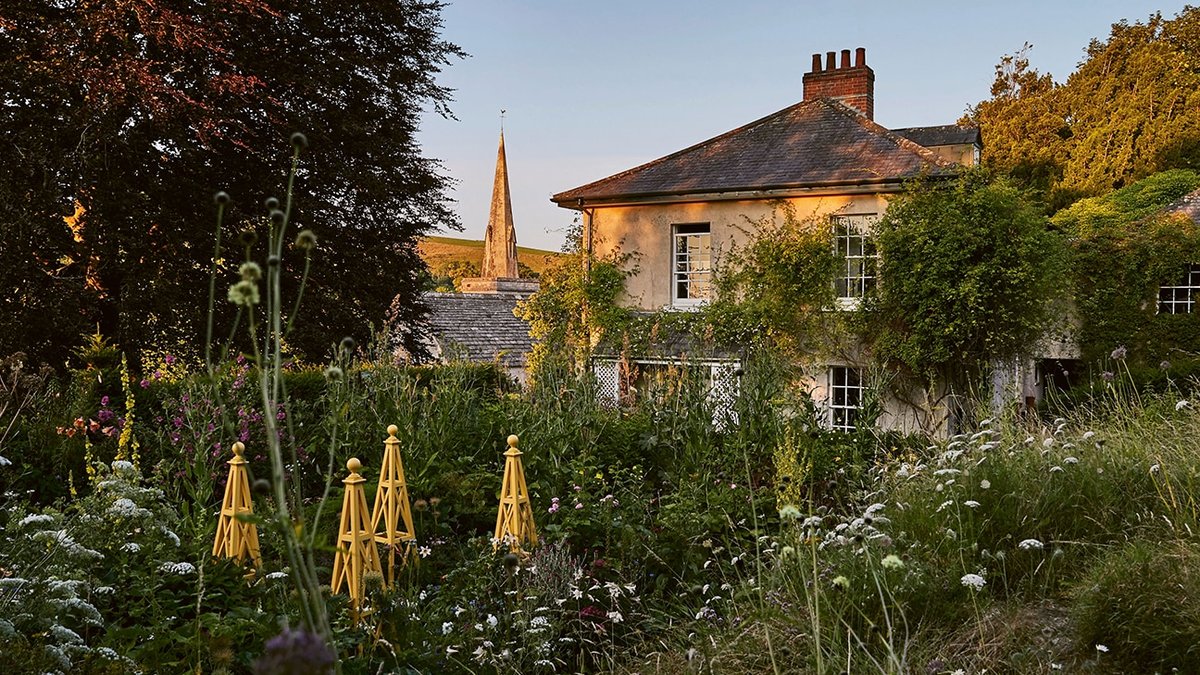
A 19th-century parsonage in West Dorset has quietly become a case study in how patience and small adjustments can transform a home—not through grand renovations, but through deliberate, seasonal evolution. Over 15 years, architectural designer Ben Pentreath and gardener Charlie McCormick have shaped the property into a living example of “slow decorating,” where every change, no matter how modest, reshapes the whole. Their new book, A Year at the Parsonage: The Story of a House and Garden, documents how the house and its surroundings unfolded organically, room by room, season by season.
The project began with a single room: the dining area, which wasn’t originally intended for meals. During the first COVID-19 lockdown summer it became Pentreath’s studio, its bay windows, added in the late 19th century in response to complaints that the house was dark, flooding the space with light. By summer, the room hosted candlelit dinners cooked by McCormick, wine, and conversations that stretched into afternoons.
The bay windows, a later addition, turned what might have been a dark, austere space into a warm hub. “You only need to look at the outside of the house, and at the one remaining narrow window that lights the kitchen, to see the very different appearance the garden front would once have had without the bays, much more austere.”
The room’s character shifted over time, starting with a pale grey paint that worked in spring and summer but felt cold in winter. After a year, Pentreath repainted it a soft pink, a subtle change that altered the mood entirely. Pentreath observes that every time you adjust one ingredient, the whole picture changes, even if everything else stays the same. Layers followed: second-hand books from a Bridport shop run by their friend Rose, McCormick’s flowers spilling in from the cottage garden, and furniture that had been in the house since the beginning, like a yellow sofa, an ottoman and a blue armchair.
What makes the parsonage distinct isn’t the scale of the changes, but their rhythm. Unlike rapid renovations, the process unfolded over years, with each season revealing new possibilities. The kitchen, for instance, was barely functional by modern standards, a built-in cupboard, a dresser, a pine table, and a sink unit Pentreath designed himself with a stainless-steel top, a pair of sinks, a dishwasher to the left and a washing machine to the right.
Yet it became a space where McCormick’s Edwardian “God Save the King” banner still hangs, and where the tiny pantry leads to a cellar repurposed as a cold larder. The sofa, salvaged from Pentreath’s parents, now sits under the window, surrounded by the family dogs, a Labrador, two corgis and, more recently, Nancy the miniature dachshund.
One detail stands out as a microcosm of the process: the Piranesi engravings Pentreath bought for £4 each in a job lot. They now reflect candlelight in the dining room, their presence unplanned but essential to the room’s atmosphere. That, more than any single design choice, captures the parsonage’s philosophy: decorating isn’t about perfection, but about the quiet, cumulative effect of
