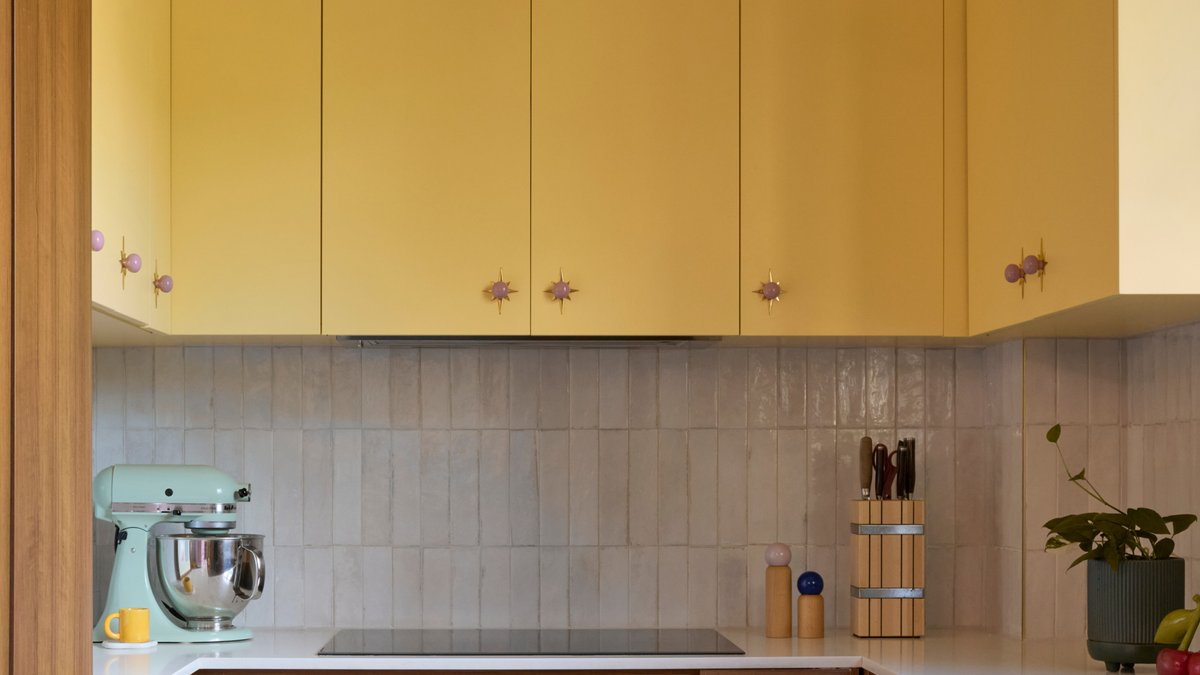
A modest kitchen in a Sydney fixer-upper became the focus of a $21,000 renovation that married mid-century modern design with practical upgrades. Originally described as having “no redeeming qualities,” the space lacked a pantry, featured a corner stove, and suffered from a disconnected layout. The owners, a professional interior designer and a musician, set their priorities on installing an induction cooktop, adding full-height storage, and fitting a French-door refrigerator to boost everyday functionality. Designer Denise Barbosa also wanted to introduce aged brass joinery and teak furniture to give the room a playful yet timeless character.
Because the budget was limited, most of the work was carried out by hand. The pair stripped out the old kitchen themselves, then assembled a U-shaped plan anchored by an island bench. They tiled both the floor and the splashback, the latter rescued at no cost from a relative’s recent renovation. Professional assistance was limited to the custom joinery, which required several adjustments to meet the desired quality while staying within financial constraints. “If I had my time again, I would wait a little longer and save a little more,” the designer said afterward. She added that “you get what you pay for.”
The final tally reached $21,570, a modest overrun that still left the project well under the original target. Yellow cabinets with pink knobs now bring joy to Denise Barbosa, even on overcast days.
Renovations of this scale often expose a trade-off between cost and quality. While the DIY approach trimmed expenses, the need for specialized work, particularly the bespoke joinery, required patience and close supervision. The couple’s experience shows that modest budgets can still achieve strong results when priorities are clearly defined and compromises are accepted from the outset.
The kitchen’s success rests on its equilibrium: functional upgrades sit alongside design elements that feel intentional rather than forced. By balancing hands-on labor with targeted professional input, the owners created a space that is both usable and aesthetically pleasing, proving that thoughtful planning can deliver impressive transformation even with limited resources.
