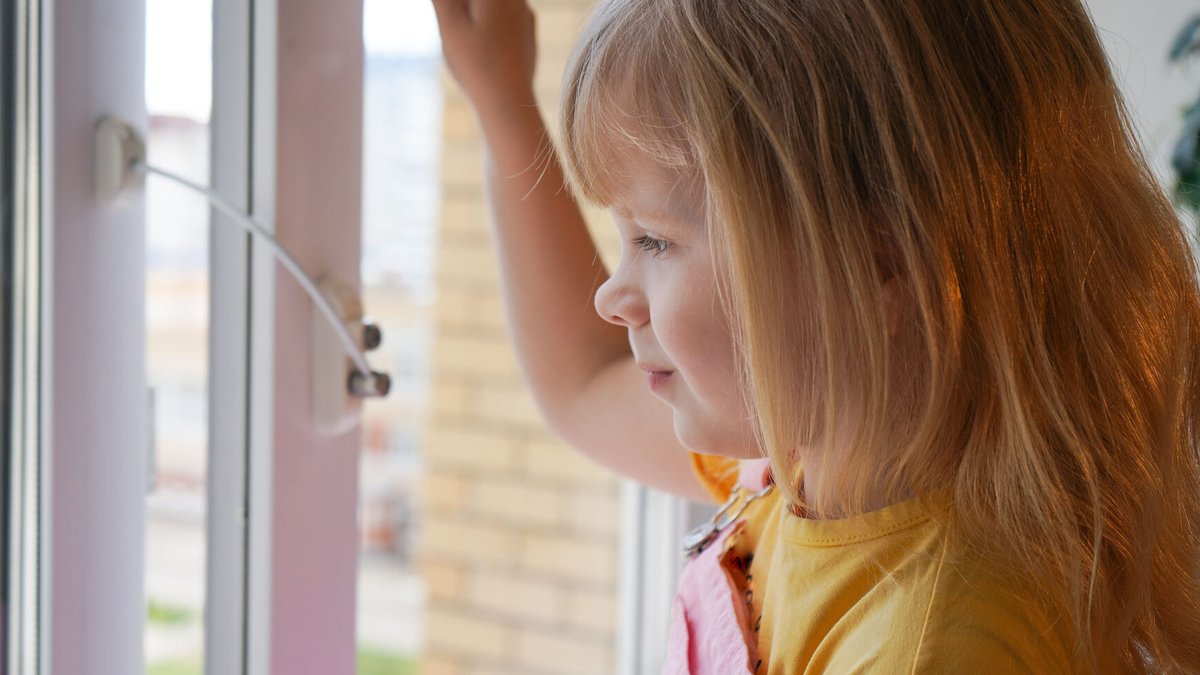
Each year, an average of eight children ages 5 and under die from falling out of windows, and more than 3,300 are injured, according to Safe Kids Worldwide. To prevent such accidents, parents can implement various childproofing methods, including installing window guards, stops, and cordless blinds. Window stops are one of the most affordable methods, costing roughly $12 per window.
Side-track stops or keyed locks are best for sliding windows, while stops and guards are ideal for double-hung windows. Window guards are metal or plastic bars spaced less than 4 inches apart to prevent children from falling through. Stops are smaller and more affordable, wedging into the window track to block the sash from opening more than a few inches.
Tyler Hull, a licensed contractor with Modern Exterior Roofing in Waukesha, Wisconsin, recommends installing window guards at mid-window height. “Kids climb. They do not respect logic,” he said. Window guards run about $30–$50, while window stops cost $10–$12.
Most modern windows come with a lock on the sash, usually a flip lock. However, these locks are relatively easy to unlock, and if your toddler figures out how to use them, you’ll have to upgrade to a more secure model. Keyed locks can range from $10 to $20 on retail sites such as Home Depot.
Locks for Sliding Windows
Sliding window locks are another option, fastening to the window track and allowing you to limit how far a window can open. These models tighten with a key wrench and are easy to install DIY for double-hung or sliding windows. Sliding window locks can run anywhere from $5–$15 on retail websites.
Traditional window blinds and shades use cords to adjust their position and control the amount of light that comes in, but dangling cords pose a strangulation risk to young children. To childproof your window treatments, consider replacing your existing blinds or shades with cordless models. Hull said, “Cordless window shades are honestly underrated. Anything with a cord is basically a hazard magnet.”
Cordless blinds can range from $10 to $50 or more for standard window sizes. They feature a tension mechanism that controls the height of the blinds or shades, as well as a wand on one side for opening them up and letting light in. By switching to cordless blinds, you can reduce the risk of strangulation altogether.
Another simple way to childproof your windows is to move furniture away from them. Hull said, “Kids push against screens, climb on furniture, or bang things against windows. The danger is not always the hardware. It is the environment around it.” Keep cribs, dressers, and chairs away from windows, and anchor any furniture near windows to the wall to prevent tipping.
Stephanie Edenburgh, CEO of Bizzie Mommy, also emphasizes the importance of removing climbable furniture near windows. “I’ve picked up the habit of shoving any piece of furniture away from the window — toy bins, beds, you name it — because kids will try to scramble up anything,” she said.
Shatter Resistant Window Film
Shatter-resistant window film is another childproofing method that can strengthen your window panes, preventing injuries from broken glass. This method is best for nurseries, bedrooms, and anywhere where there’s a risk of your child bumping into the glass. Hull said, “Shatter-resistant window film is smart for anywhere glass meets play space. I have installed it in dozens of homes where kids have toy-throwing phases. For around $80 to $100 per standard-sized window, you get a layer that holds the glass together when it breaks.”
While shatter-resistant film isn’t a substitute for window guards or stops, you can use it in combination with other childproofing methods for additional safety. It can also help you save on glass replacement costs by preventing the glass from shattering in the first place. Always test any safety feature after installation to ensure it’s child-resistant.
When choosing a childproofing method, consider the type of windows you have. Single-hung and double-hung windows are the most common, and multiple methods work for these setups. Theresa Bertuzzi, chief program development officer and co-owner of Tiny Hoppers, recommends using sliding window locks or stops to prevent the window from fully opening.
Childproofing Different Window Types
Casement windows can be extremely dangerous to children because they open out wide, making them easy to climb through. To childproof them, install lever locks or restrictors. If your casement windows use a crank to open, remove the crank and store it out of reach so that children can’t open the windows at all. Basement egress windows need a different treatment, as they serve as an access point for exiting the house.
Hull said, “Basement egress windows need a different treatment. You want escape routes for emergencies, so do not block them entirely.” Some of the most effective methods for these windows are locks that are difficult for children to use. Bertuzzi explained, “Ensure egress windows have secure locks that adults can easily operate; avoid placing furniture nearby that children can climb.”
Window safety is a necessity, as falls can occur when children climb on nearby furniture and then fall through an open window, open the window themselves, or press through a window screen. Other injuries can happen from falling off a windowsill, getting tangled or strangled in corded blinds, or breaking a window and stepping on the broken glass. Edenburgh said, “Give toddlers a climbable surface, a loose cord, and almost every emergency scenario starts right there.”
Some parents believe that open windows in their home are safe because the screen is there to protect their children, but this can be a fatal mistake. Screens are not a safety feature, and they’re not designed to keep your child from falling through. They’re only designed to let air in and keep insects out. Window screens alone are not enough to protect children, and Edenburgh added, “Most slips and bangs settle in bedrooms or playrooms, usually when a parent feels convinced their little one is still tucked away and out of trouble.”
